 The Mining Minute
Evidence before amplification.
Our standard for news, creator ideas and brand initiatives.
Three kinds of story, clearly identified
The Mining Minute is developing a resource-sector publishing desk for reported news, contributor ideas and company initiatives. Those formats can share an audience without sharing a label. An editorial article should identify its sources. A contributor piece should name its author and relevant relationship to the subject. A company-supported story should state that relationship where the reader encounters the story, not depend on a general footer to explain it.
What contributors can send now
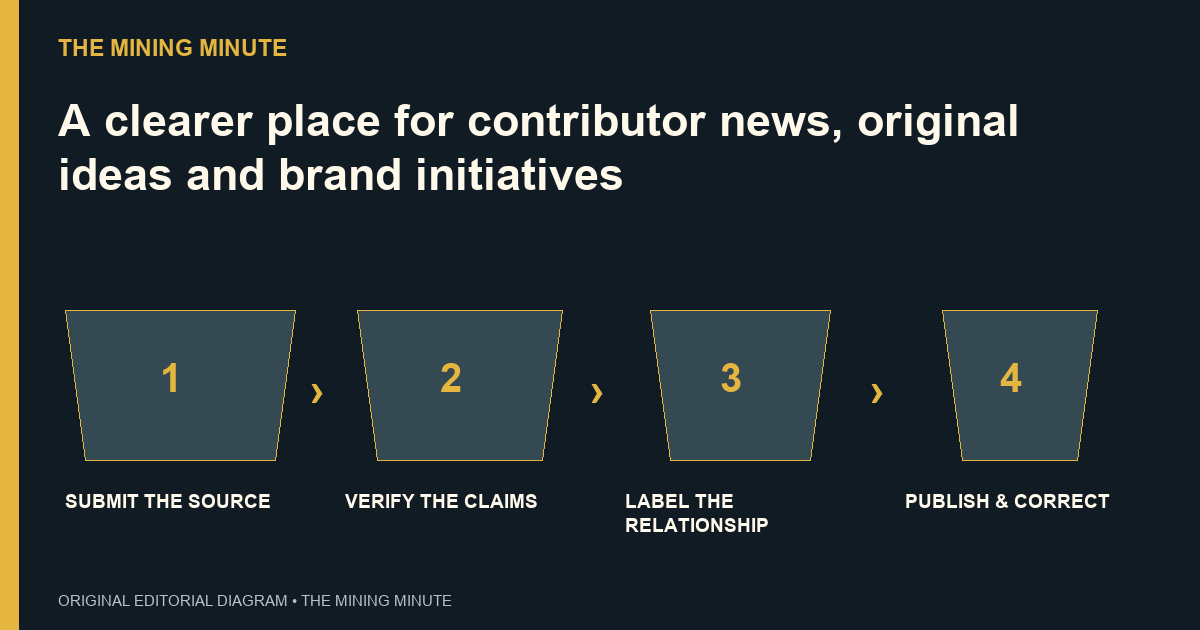
The current intake is an editorial enquiry by email. Send a proposed headline, the original announcement or document, a short explanation of what changed, your name and your relationship to the subject. Include the date and location relevant to the story. If you supply images, explain who made them and whether you can authorise their publication. Sending an enquiry does not create an account, take payment or guarantee publication. Self-service member accounts remain a future step.
What our desk checks before publication
Our review starts with provenance: can the desk find the original document and identify who made the claim? Next comes context: does the summary preserve the project stage, dates, qualifications and material uncertainty? Images need to match the subject and carry an accurate caption. A diagram should be labelled as a diagram; a generic photograph should not imply that it depicts a named project. Missing evidence is a reason to hold a story, not a prompt to invent the missing detail.
A useful role for automated research
Automated research can help locate releases, compare an update with an older source and prepare a structured first draft. It should not silently publish copied releases, make up quotations or turn an issuer’s opinion into an independent finding. Our operating direction is to keep source links, preserve original dates, check for duplicates and label the resulting format. A story with unresolved sourcing or image rights should stay unpublished until the issue is resolved.
Keep brand initiatives useful to readers
A brand initiative can be worth covering when it explains a real activity: a service launch, a research collaboration, an equipment development or an industry education project. The article should describe the activity and its evidence, identify who is involved and disclose any paid relationship. It should not imply an endorsement, customer relationship or verified result merely because a business submitted material. Named-business enquiries should go to that business’s verified contact details.
Corrections and the next stage
Readers can send a correction with the article link, the disputed statement and supporting evidence. Substantive corrections should be recorded on the affected article, while ordinary layout deployments should not reset its publication date. The next platform stage is a moderated contributor workflow with clear permissions and submission status. Until that is implemented and tested, this page describes the editorial process and email intake accurately rather than presenting an unfinished membership service as live.