 The Mining Minute
One-minute source brief
Germany broadens critical minerals ties with Australia and ASX-linked projects
Deutsche Bank research says Germany remains highly import-dependent for critical minerals, while IMARC meetings and several ASX-linked projects highlighted closer Australia-Germany cooperation across rare earths, graphite and rubidium.
Stockhead Resources · Original publisher source · Source release: 2026-11-18
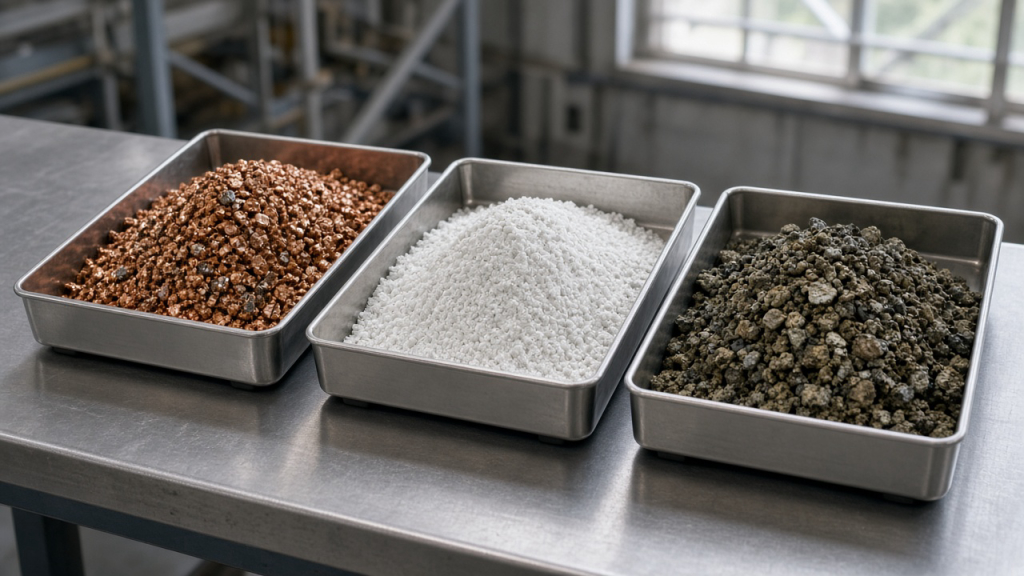
Import reliance drives German policy attention
Deutsche Bank said Germany remains highly exposed to critical raw material imports, with critical minerals making up less than 2% of imports but supporting defence, semiconductors, batteries, renewable energy and advanced manufacturing. The bank said supply disruptions could hit chains hard, and argued resilience needs long-term institutions, public funding and better stockpiling. [1]
IMARC meetings highlighted government engagement
Germany’s presence at IMARC in Sydney included a large pavilion, 18 companies exhibiting and Parliamentary State Secretary Stefan Rouenhoff’s visit to Canberra. He met Australian resources ministers and joined conference sessions, while the German-Australian Chamber and German Mineral Resources Agency held German Day to strengthen cooperation along the critical minerals value chain. [1]
Projects advanced rare earths, graphite and rubidium
Arafura Rare Earths broke ground on Nolans after a €50 million German Raw Materials Fund investment and an offtake for 520 tonnes per annum of neodymium-praseodymium. Evion signed a binding graphite term sheet, Everest joined the EU Raw Materials Mechanism, and Caravel expects its definitive feasibility study before year-end. [1]
Sources & footnotes
- Stockhead Resources · 2026-11-18 · Australian ingredients may help feed German hunger for critical minerals. Checked 2026-11-22.