 The Mining Minute
Reader guide
Lithium concentrate is not a finished battery chemical
A practical guide to the product names that make lithium announcements difficult to compare.
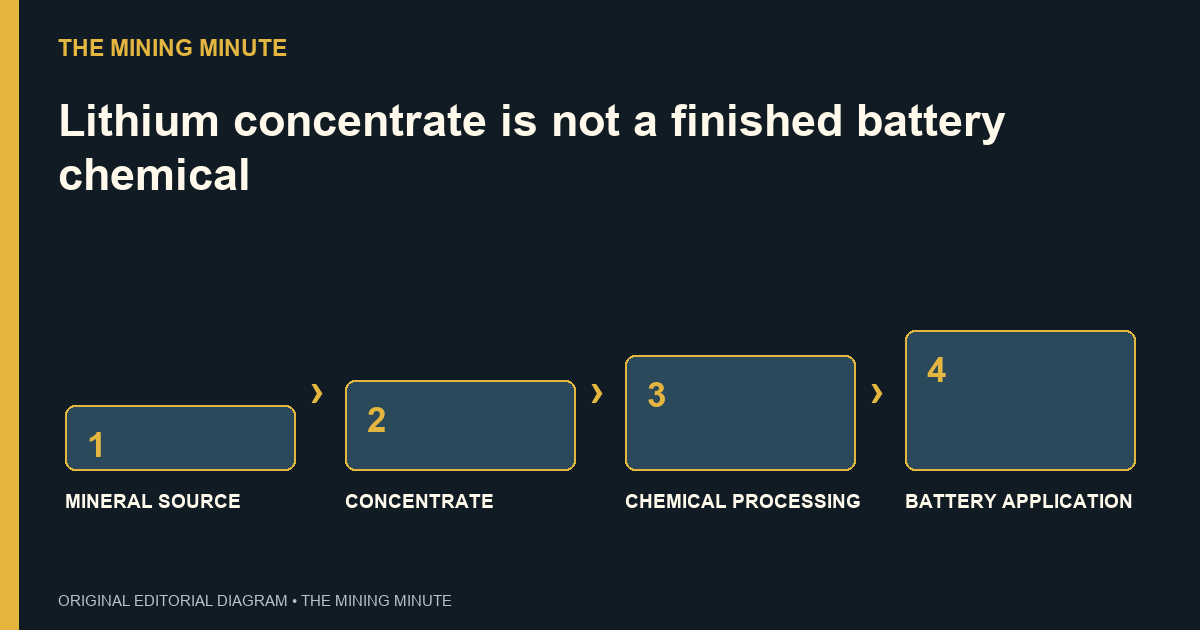
Name the output first
NRCan’s lithium overview distinguishes the metal from compounds including lithium carbonate, lithium oxide and lithium hydroxide. It identifies rechargeable batteries as lithium’s largest global use. A familiar end use should not hide the actual output of a project: a mine announcement and a chemical-processing announcement can concern different materials and different commercial steps.
Do not compare unlike tonnes
Our first editing question is: tonnes of what? Preserve the stated material, grade or specification and period. If the source reports concentrate capacity, do not relabel it lithium-metal production or finished battery material. Where a company uses an equivalent measure, find its definition and assumptions before presenting it beside another issuer’s figure.
Look for the unfinished step
Ask which step is operating, which is proposed and which depends on further construction, qualification or agreements. A processing ambition deserves a clear explanation of the intended input and output. It should remain an ambition when the source does not establish operating results. A planned customer relationship should also be described according to the agreement actually announced.
What the reader should retain
The useful lithium question is not simply whether batteries need the mineral. It is what this particular business intends to produce, what evidence exists and what milestone would demonstrate progress. This desk will connect demand context with those project-specific distinctions. We do not infer project economics or a security’s future performance from a supply-chain illustration.
Sources & footnotes
- Lithium facts — Natural Resources Canada. Checked 2026-10-24.