 The Mining Minute
Reader guide
Copper from concentrate to customer: what the production number means
Why the material, reporting basis and destination matter when reading a copper announcement.
Begin with the material
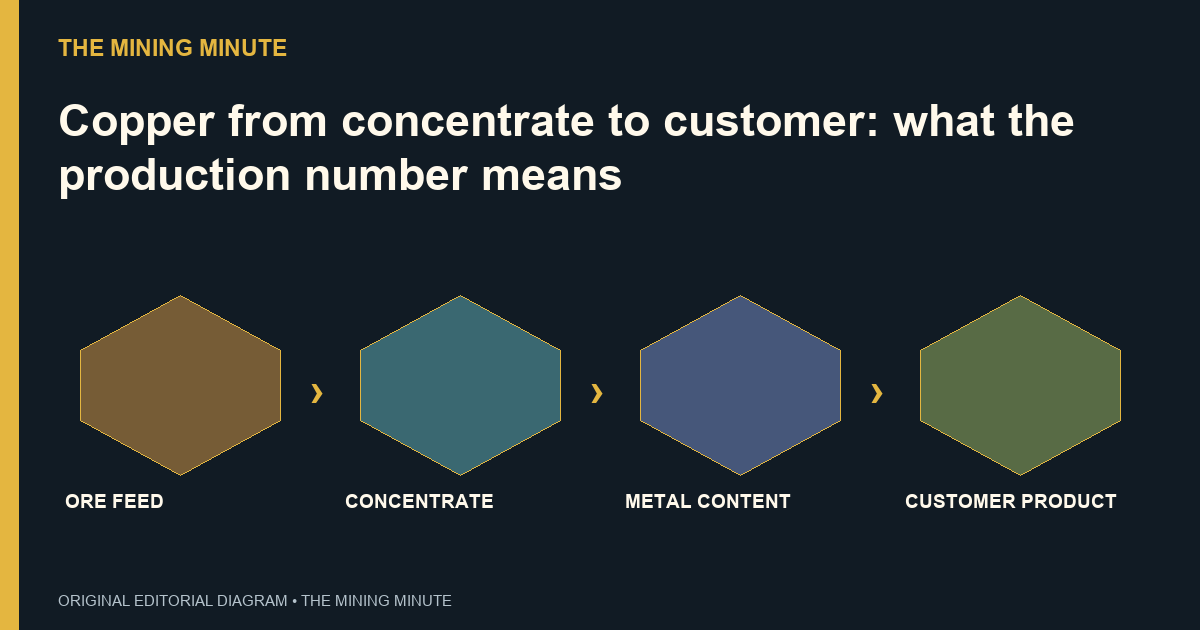
NRCan describes copper as a conductor used in wiring, plumbing, industrial machinery and clean technologies. Its Canadian production reporting includes copper contained in concentrate. That last distinction matters: the mass of material moving through a plant is not automatically the mass of copper in that material. Start a reading note by recording exactly what product the announcement measures.
Keep the reporting basis beside the figure
An ore-processing volume, concentrate shipment and contained-metal figure can all be legitimate measures of different activities. Our checklist asks for the product, unit, reporting period and ownership basis before any comparison. If a release gives only one of those measures, do not fill the others with assumptions. Look for the source’s definitions, tables and supporting operational discussion.
Ask what happens next
A useful copper story follows the product beyond an impressive headline. What stage does the source describe, what processing remains, and what evidence supports the stated output? Those questions are particularly useful when a new project is discussed alongside an operating mine. A planned facility and an established shipment programme belong at different places in the article.
A clearer comparison
To compare two reports, make a small worksheet: material reported, contained metal if disclosed, period and next milestone. Leave an empty field empty when evidence is absent. Readers gain more from a visible limitation than a false like-for-like league table. The base-metals desk uses this approach to connect industry demand stories with the actual activities described by producers.
Sources & footnotes
- Copper facts — Natural Resources Canada. Checked 2026-10-24.