 The Mining Minute
Reader guide
Iron ore and steelmaking: read the product before the tonnage
A large shipment figure is more useful when the product and comparison basis remain visible.
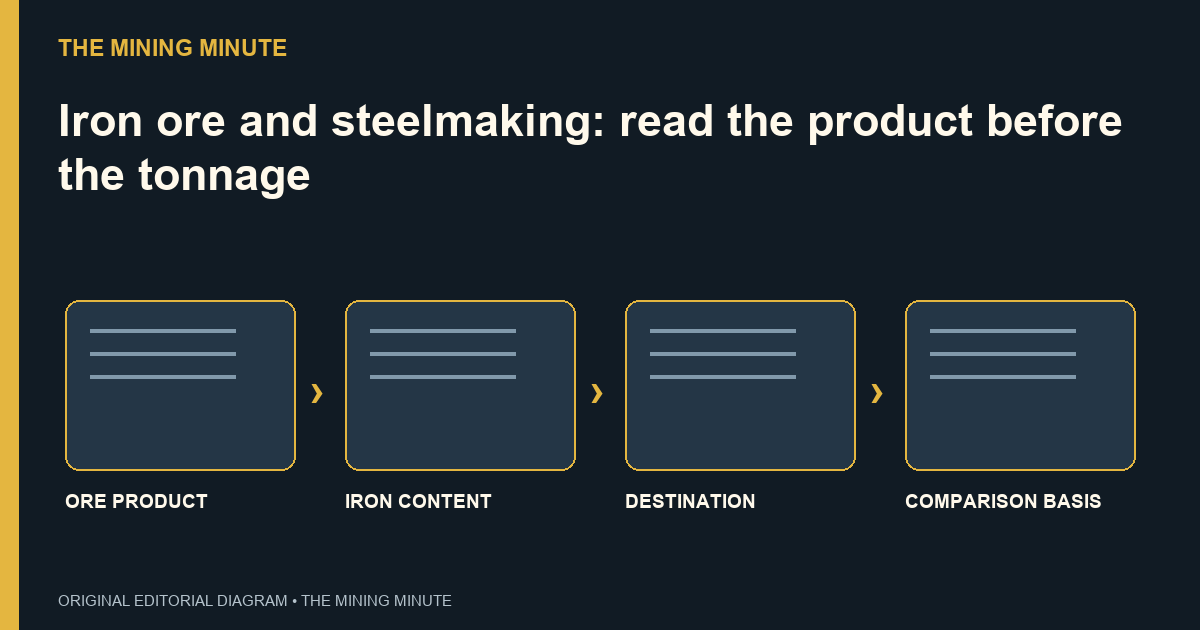
The customer helps explain the commodity
NRCan reports that approximately 98% of iron ore is used to make steel. Its facts page separates concentrate and pellets in its discussion of Canadian production and trade. These product descriptions are a starting point for reading the industry: a tonnage figure becomes more informative when readers can see what material was measured and where it fits.
Do not lose the qualifiers
When a release uses terms such as wet tonnes, dry tonnes, concentrate or pellets, keep those words in the summary. Our comparison method records the precise product, period and ownership basis. If two documents use different measures, explain that before comparing them. A headline that drops the qualifiers can suggest a direct comparison the source never made.
Follow the operating explanation
For an operating update, ask what management identifies as the reason for a change and whether the comparison uses the same period. For a development proposal, ask which production or processing step remains ahead. The largest number on the page need not be the most useful one if it represents a long-term target rather than current activity.
What we will watch
This desk follows the relationship between raw material, processing and steelmaking without treating every product as interchangeable. Source documents should supply the basis for any quality, emissions or performance claim. A product label alone does not establish the environmental performance of an entire steel supply chain. Where the necessary evidence is absent, the question stays open.
Sources & footnotes
- Iron ore facts — Natural Resources Canada. Checked 2026-10-24.